Mehndi Decor
Intimate floor-seating design, floral chandeliers, and bridal vignettes for mehndi celebrations.
The mehndi is the most intimate moment of an Indian wedding week. The bride sits for hours while her henna is applied, surrounded by her closest female family and friends. Our mehndi designs are built for that intimacy — low seating, soft textile layering, floral chandeliers of jasmine and marigold, and photograph-ready vignettes the bride will return to in her wedding film for the rest of her life. Scale is modest compared to the ceremony and reception, but the detail density is arguably higher. Every cushion, every hanging floral, every petal-strewn platform is considered.
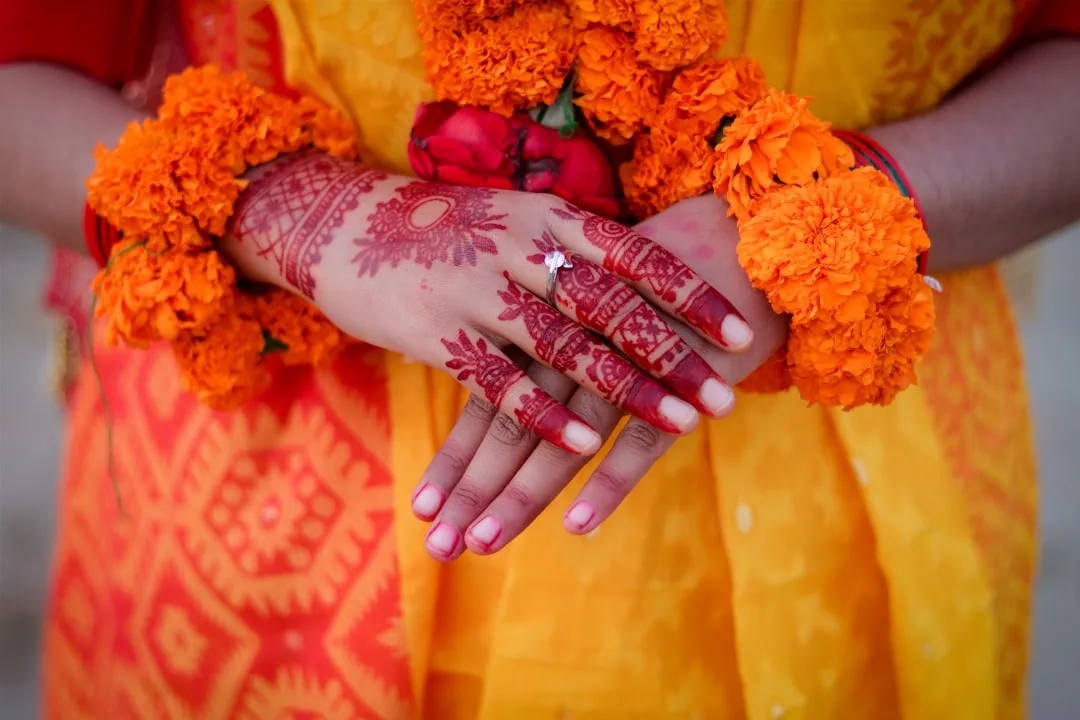
- ✻Majlis-style floor seating with layered textiles and floor cushions
- ✻Bridal throne design — carved swing, four-post canopy, or floral wall-backed
- ✻Overhead jasmine, mogra, and marigold chandelier installations
- ✻Four-vignette photo styling for dense afternoon portrait sessions
- ✻Henna artist workstation styled to match the wedding palette
Floor-seating and majlis-style design
Our signature mehndi setup is a majlis-style floor arrangement: low platforms layered with Persian or Indian rugs, oversized floor cushions in jewel-tone velvet and silk, bolster pillows, and a raised bridal throne or swing at the visual center. We source textile elements specifically for mehndi use — they are not recycled reception décor — so the palette and texture language match the ceremony day's overall aesthetic. Cushion arrangements accommodate between fifteen and sixty guests depending on the scale of the mehndi.
The bridal throne is the design focal point. We build throne structures in-house in several styles: a traditional carved wooden swing dressed in jasmine and rose; a four-post canopy throne with marigold and amaranthus cascades; and a floral wall-backed throne for brides who prefer a more photographable single focal point. Throne height is calibrated to keep the bride comfortable for the three-to-five-hour henna application while sitting raised enough that guests can see her and her camera-ready pose.
Secondary seating for the bride's mother, sisters, and closest friends surrounds the throne in a semi-circle. This seating is softer and lower than the throne, creating a visual hierarchy that always directs the eye back to the bride during the henna application.
Floral chandeliers and overhead installation
Overhead floral installation defines the mehndi visually more than any other ceremony in the week. Our mehndi chandeliers are typically built in jasmine, mogra, and marigold strings — the flowers that carry the strongest cultural association with the ceremony — and suspended at varying heights to create a layered ceiling. A typical mehndi has three to seven chandelier clusters, with the densest installation directly above the bridal throne.
Outdoor mehndi setups at estate venues and resort courtyards allow for more dramatic overhead work. At venues like Ojai Valley Inn's pool courtyard, the Meadowood garden terrace, or the Rosewood Miramar pool deck, we build floral canopies that extend the entire ceremony space — guests sit under a ceiling of flowers that photographs beautifully in the afternoon light.
Indoor mehndi setups in ballrooms and suites require different overhead solutions. We use the venue's existing rigging points where available, and free-standing vertical structures where they are not. For suite-based intimate mehndis, we often build suspended floral installations anchored to a lightweight frame rather than the ceiling.
Photo vignettes and detail styling
The mehndi is photographed more densely than almost any other day of the wedding week, because the pace is slower and the bride is available for portraits throughout the afternoon. We design at least four distinct photo vignettes: the bridal throne itself, a floral swing in a corner of the space, a detail-heavy styling corner with hand-tied floral ropes and candles, and an outdoor or window-side soft-light setup for close-ups of the henna work.
Detail styling includes every small touch that appears in close-up photography: thali arrangements of mehndi paste and cones dressed in rose petals, brass-and-floral welcome trays, personalized stationery and monograms, jasmine-woven hair pieces for the bride, and a henna artist's workstation styled to match the overall palette. These details are often styled by our team in coordination with the photographer's first-look walk-through.
Signature scents are a quiet but meaningful element. The mehndi ceremony is associated with jasmine and mogra specifically, and we layer those scents through real flower placement — not artificial fragrance — so the sensory memory matches the visual one.
Palette, timing, and production
Mehndi palettes lean warm and saturated. Traditional palettes favor deep marigold, mustard, burnt orange, and crimson with jasmine white as the counterbalance. Contemporary fusion palettes often shift toward blush, dusty rose, and champagne with marigold pops for cultural grounding. Our palette conversation happens early because mehndi palette often sets the visual tone for the entire wedding week.
Install timing depends on the ceremony format. A morning mehndi typically installs starting at first light, with bridal throne dressing completed by the time the bride arrives for her first henna session. An afternoon or evening mehndi installs during the preceding morning and uses natural midday light as part of the design. Our team stays on-site throughout the ceremony for floral refresh and any adjustments the photographer requests.
Budget scales with overhead floral density and throne complexity. A modest mehndi in a suite or small venue starts around $8,000; a full estate mehndi with extensive overhead canopy and elaborate throne design can reach $45,000 or more.
Begin the conversation
Share your dates, venue, and details — Alona reads every inquiry personally and responds within one business day.
Request a consultationExplore related design guides
Ceremony & design guides
Luxury venues we design
Serving these cities
Planning & pricing