Haldi Decor
Morning-light haldi ceremony design — marigold canopies, pithi seating, and golden-hour vignettes.
The haldi is the wedding week's brightest ceremony, in every sense. Turmeric paste is applied to the bride and groom — separately or together depending on regional tradition — and the visual language is dominated by golden yellow, saturated marigold, and warm morning light. Our haldi designs are built around photography windows: we set the installation early so the ceremony itself falls in the hour of the best natural light, then layer the space with florals that amplify rather than compete with that warmth. Haldi is typically outdoor, typically joyful, and typically one of the most photographed mornings of the wedding week.
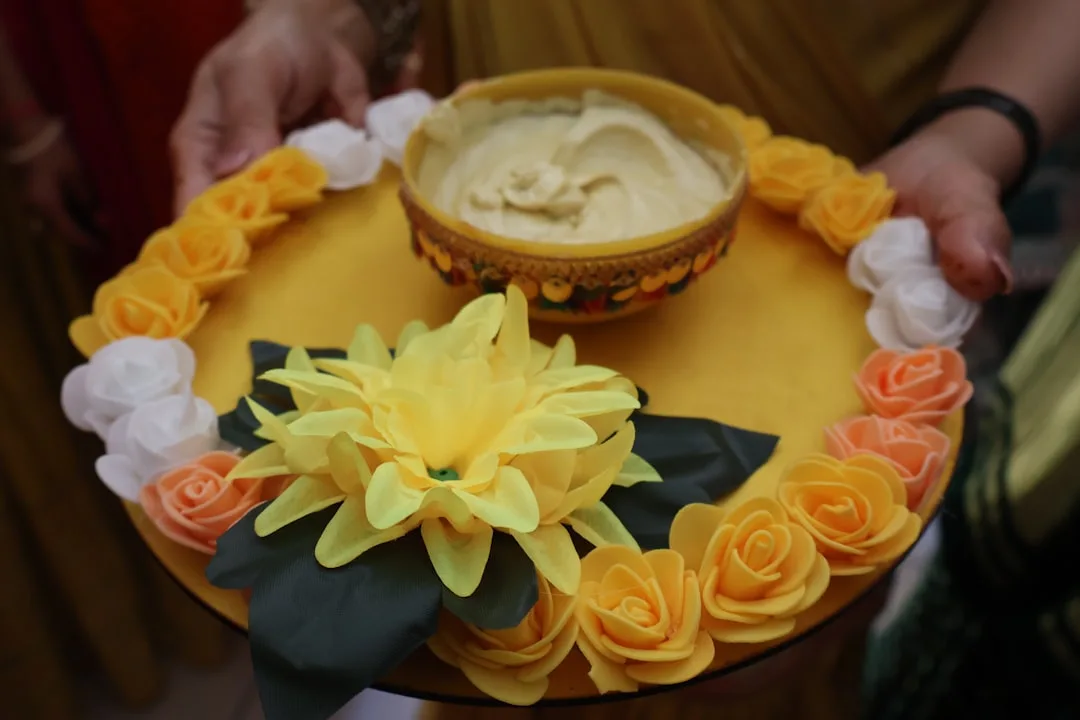
- ✻Marigold-anchored palette with secondary jasmine and tuberose
- ✻Pithi seating — raised floral platform or carved throne dressed in marigold
- ✻Overhead canopy installation calibrated to morning photography light
- ✻Styled application thali and turmeric detail table
- ✻Outdoor pool-courtyard and estate-lawn venue expertise
Palette and marigold as the anchor flower
Marigold is the anchor of every haldi we design. The flower carries the ceremony's visual symbolism — golden, protective, prosperous — and we use it in quantities that look right on camera without becoming so dense the ceremony feels staged. Typical haldi designs use five to fifteen thousand marigold stems across arches, hanging garlands, floor scatter, and tablescape work, depending on the ceremony scale.
Secondary flowers are chosen to complement rather than compete. White jasmine and tuberose layer in fragrance and a softer textural counterbalance. Saffron and warm orange roses extend the golden palette through the arrangement work. Green foliage — fern, palm, and banana leaves — adds structural depth and grounds the floral in the landscape. We avoid cool-toned flowers (lavender, blue, deep purple) in haldi designs because they read visually off against the golden light.
For fusion haldi ceremonies, couples sometimes want to pull the palette toward blush, champagne, and dusty gold rather than saturated marigold. We accommodate this by using pale marigold varietals, cream-toned roses, and soft yellow ranunculus in place of deep orange, while keeping marigold as the traditional anchor. The result is recognizably haldi without the most saturated aesthetic.
Pithi seating and turmeric application setup
The pithi or haldi application is the ceremony's active moment. Depending on regional tradition, the bride and groom either sit separately in their respective family homes or venues, or together in a joint ceremony. Our pithi seating designs accommodate both: we build raised floral platforms or carved wooden thrones, dress them in marigold and jasmine, and position them under overhead canopy installation that frames the couple beautifully from the photography angle.
Seating heights are calibrated to the application process. The couple sits while family members approach one at a time to apply turmeric paste, typically with a small spatula or spoon, then feed a bite of sweet or perform a blessing gesture. We size the seating so family can comfortably reach the bride or groom's arms and face without awkward reach, and we include protective draped fabric that keeps the couple's outfit clean during the ceremony.
Application table styling matters. The pithi mixture is typically presented in a brass or silver thali, surrounded by small bowls of rose petals, rose water, and additional turmeric. Our team styles this table with floral detail that reads beautifully in close-up photography, coordinates with the couple's outfit, and keeps within arm's reach of the seated couple.
Outdoor haldi venues and morning light
Most haldi ceremonies we design are outdoor, and the venue choice affects the design significantly. Pool courtyards at Ojai Valley Inn, Rosewood Miramar, and the Ritz-Carlton Laguna Niguel offer framed outdoor settings with consistent morning light and protected floral installation conditions. Estate lawns at Meadowood, Beaulieu Garden, and Hummingbird Nest Ranch give us more scale but require more weather contingency.
Golden-hour timing is a design consideration. Morning haldis scheduled between 9:00 and 11:00 AM benefit from the diffused morning light that photographs beautifully without harshness. Late-morning haldis scheduled after 11:00 AM need shade structures or ceiling installation that filters direct sun. We discuss ceremony timing during design consultation specifically because it affects how the floral installation will read on camera.
Weather contingency matters. Marigold and jasmine both handle heat reasonably well, but prolonged direct sun and strong wind both affect installation integrity. For outdoor haldis we always have a weather contingency plan — either an indoor alternative setup or a weather-protected outdoor option — built into the production plan.
Flow, cleanup, and logistical realities
The haldi ends with a specific logistical moment: the turmeric paste needs to come off, the couple typically wants to rinse and change, and the ceremony space needs to transition either to breakfast or to preparation for the next event. Our design accounts for this with cleanable surfaces under and around the seating, dedicated paste removal towels and water basins, and fast-access paths to the couple's changing suite.
Haldi ceremonies typically run forty-five minutes to ninety minutes. We staff the event with a small team that stays on-site throughout, refreshing any wilted or displaced floral and keeping the space camera-ready for the photographer.
Post-ceremony, our team breaks down the installation within a ninety-minute window so the space can transition cleanly to the next event. This is especially important for single-day haldi-into-sangeet combinations at venues where the room turns over for an evening event.
Begin the conversation
Share your dates, venue, and details — Alona reads every inquiry personally and responds within one business day.
Request a consultationExplore related design guides
Ceremony & design guides
Luxury venues we design
Serving these cities
Signature flowers
Planning & pricing