Baraat Decor
Ghodi, elephant, and procession floral design for Indian wedding baraats at California's luxury venues.
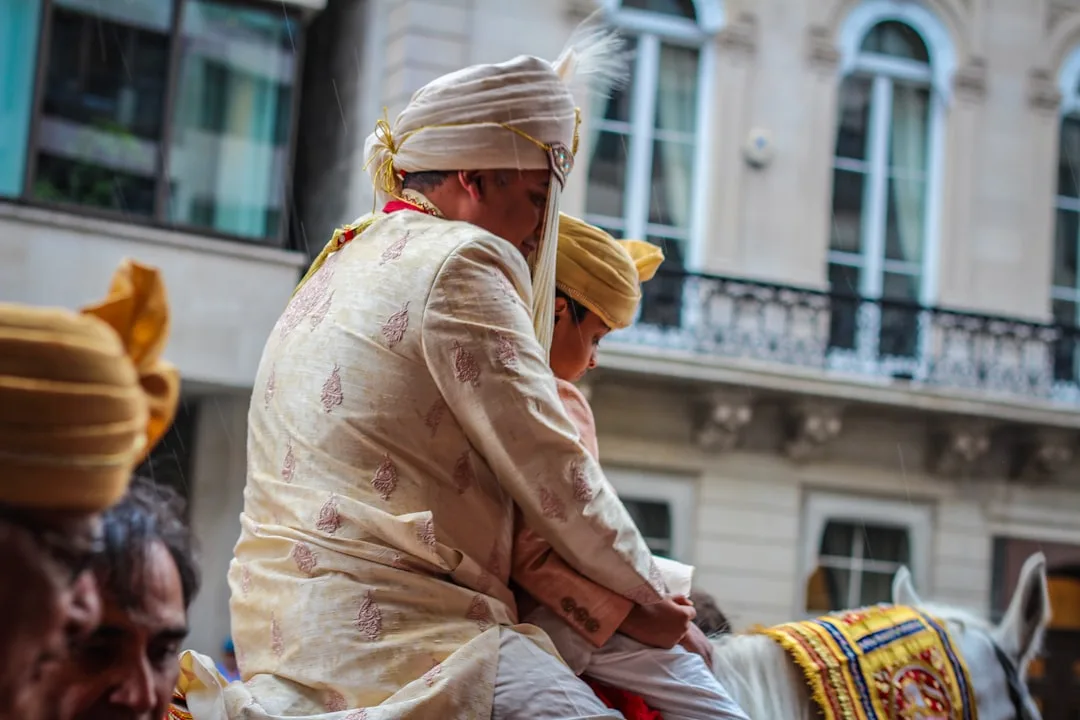
The baraat is the groom's arrival — a procession that begins somewhere outside the ceremony space and moves, with full musical and emotional volume, to the threshold where the bride's family waits. It is one of the most photographed moments of an Indian wedding and one of the most technically coordinated. We design baraat florals that read beautifully from every camera angle, hold up under sun and motion, and move cleanly through the venue's specific access path. Every baraat we produce is walked twice before wedding day — once with the venue coordinator, once with the dhol team and the groom's immediate family — so the route, the staging, and the timing are understood by everyone.
- ✻Ghodi, elephant, and on-foot baraat production at scale
- ✻Route walkthrough with venue, planner, and dhol team pre-wedding
- ✻Regional palette expertise (Punjabi, Gujarati, Marwari, Sikh, fusion)
- ✻Processional canopy, attendant florals, milni arrival installation
- ✻Fire and noise permit coordination with venue and municipality
The three baraat scales we produce most often
Ghodi baraat — the classical form, with the groom mounted on a white horse. Our ghodi decoration starts at the bridle and extends back along the reins, saddle, and mane, using marigold and rose in the regional densities the family expects. We source from California ghodi vendors who understand wedding logistics, coordinate the horse's arrival and departure separately from the floral install, and include a handler who stays with the animal throughout the procession. Typical ghodi-ready venues include the Beverly Hills Hotel's Crescent Wing drive, Meadowood's main entrance road, and Ojai Valley Inn's circular drive.
Elephant baraat — available at select venues, and only during seasons when licensed California elephant handlers are operating. Our elephant floral dressing covers the forehead plate, trunk garlands, and a dressed howdah seating platform for the groom. Elephant baraats require significantly more lead time — typically three to four months — because handler scheduling, permits, and venue approvals all need to align. Private estate venues in Santa Ynez, Hidden Hills, and Napa Valley are the most likely California settings to approve elephant baraats; most hotel ballroom venues do not.
On-foot baraat — the fastest-growing category, particularly for urban venues like the Beverly Hills Hotel, Four Seasons San Francisco, and Hotel Bel-Air where ghodi access is impractical. Our on-foot baraat design centers on the groom and his closest circle: garlanded safa or pagri, a processional canopy held by four groomsmen, floral hand-held poles, and petal-tossing attendants. On-foot baraats actually photograph better than ghodi baraats in many venues because the camera can stay closer to the groom's face.
Route design and venue coordination
Every baraat we produce begins with a route walk. We meet with the venue's wedding coordinator, the groom's planner, and the dhol team to map the exact path — starting point, midway choreography moments, and the milni arrival where the groom's family meets the bride's. We note every door, turn, low ceiling, narrow passage, and sun exposure. For outdoor resort venues like Meadowood, Auberge du Soleil, and Ojai Valley Inn, we also note wind-sensitive sections where garlands need reinforced fastening.
Dhol and musical coordination is critical. The baraat's energy is driven by the dhol players, and our team works with them to sync floral moments — petal tosses, garland presentations, fireworks or sparklers when permitted — to musical peaks. We do not book the dhol team, but we coordinate with whoever your planner has hired to make sure the floral choreography lands on the beat.
Venue-specific fire and noise rules matter. Many Los Angeles and San Francisco venues restrict sparkler use, cold fireworks, and amplified music beyond specific hours. Napa Valley venues have especially strict noise ordinances. Our team coordinates fire and noise permits where needed, and we know which venues reliably approve what.
Baraat florals: what we produce
Ghodi dressing — forehead plate in dense marigold and rose, bridle wrap, saddle flowers, reins garlands, and a draped chest cover. Color palettes match the groom's sherwani and the overall wedding palette. For a Punjabi wedding, we lean into saturated orange and crimson; for a more fusion aesthetic, we pull the palette toward muted coral, cream, and soft gold.
Processional canopy — a four-pole chaadar held above the groom by groomsmen, dressed in phoolon ki chaadar style with jasmine, mogra, and rose. Canopies photograph beautifully and give the groom a defined visual center of gravity during the procession. We build canopies in aluminum poles that are light enough for groomsmen to hold for fifteen to twenty minutes without fatigue.
Group and attendant florals — garlands for the groom's parents, siblings, and closest friends; pagris and safas for the men; petal baskets for younger family members who walk ahead tossing rose petals. These small touches are what make the procession feel fully dressed rather than centered only on the groom.
Arrival moment florals — the milni, where the groom's and bride's families meet, often calls for an additional floral installation at the threshold: an arch, a draped gate, or a floral tunnel the groom passes through before entering the ceremony space. We time this install to finish twenty to thirty minutes before the baraat's expected arrival.
Baraat timing and production logistics
A typical baraat runs twenty-five to forty-five minutes from the groom's mounting or assembly point to the milni threshold. We time the floral installation backward from the baraat's scheduled start: ghodi floral dressing begins approximately ninety minutes before the baraat, processional canopies are assembled thirty to forty-five minutes before, and attendant garlands are staged in a holding room for quick distribution.
Weather is a live consideration. Summer baraats in Palm Springs, the Coachella Valley, and much of SoCal require flowers that hold in heat — we favor marigold, rose, orchid, and anthurium in those conditions and avoid jasmine and mogra which wilt quickly. Napa Valley late-afternoon baraats benefit from flowers that read well in golden hour light; we lean into saturated marigold and rose for those windows.
Fire permits, where needed for sparklers or cold fireworks, are handled by our production team. Lead time for permit approval runs two to eight weeks depending on the jurisdiction, so we flag this in the initial planning conversation rather than at the last minute.
Begin the conversation
Share your dates, venue, and details — Alona reads every inquiry personally and responds within one business day.
Request a consultationExplore related design guides
Ceremony & design guides
By tradition
Luxury venues we design
Serving these cities