Mandap Design
Custom-built mandap structures for Hindu, Sikh, Jain, and fusion Indian weddings at California's finest venues.
The mandap is the architectural and spiritual center of a Hindu wedding — the canopy under which the couple takes the seven pheras and becomes one. Our mandap design practice covers every major regional and religious tradition, from the classical four-pillar kalyana mandapam of a Tamil Brahmin wedding, to the open-canopy palki of a Sikh anand karaj, to the contemporary round mandap that modern fusion couples increasingly request. Every mandap we build is engineered in-house, which means the frame, rigging, floral pathways, and havan clearance are designed together rather than bolted onto a rental structure. That is why our mandaps photograph the way they do and why your pandit can work comfortably inside them.
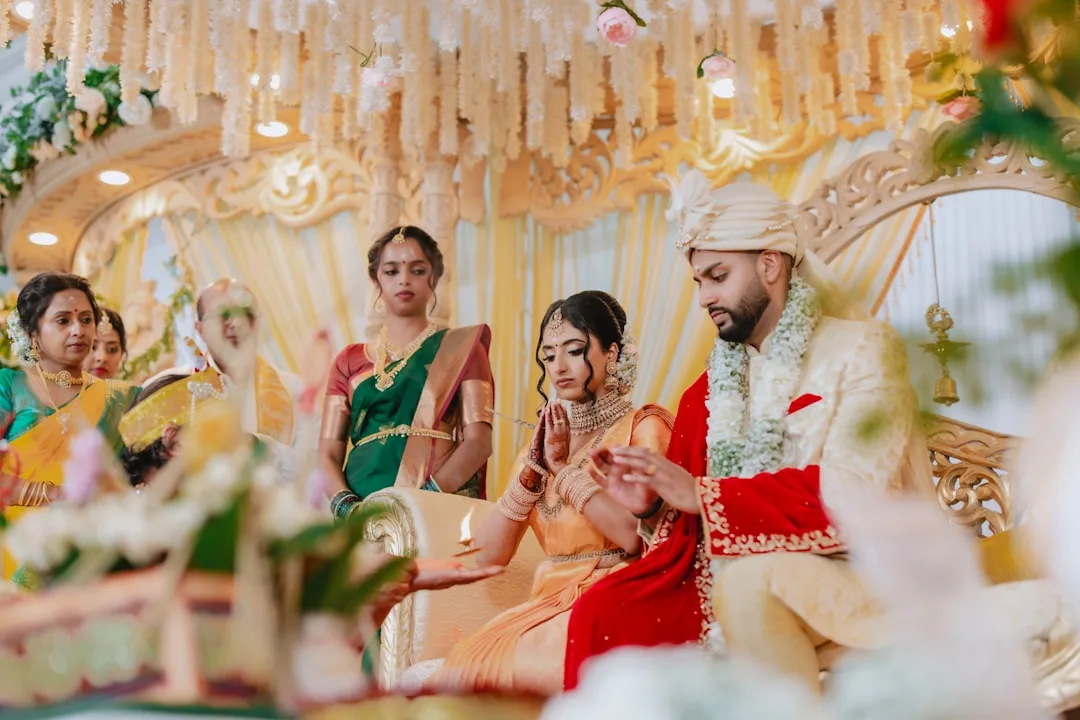
- ✻Five mandap silhouettes: traditional four-pillar, round, Sikh palki, suspended canopy, modern minimalist
- ✻In-house fabrication — we build the frame, not rent it
- ✻Havan flame clearance engineered into every traditional mandap
- ✻Regional palette expertise across North, South, and Sikh traditions
- ✻Standard 12×12 footprint, custom sizing up to 16×16 on request
- Standard footprint
- 12 ft × 12 ft
- Default pillar height
- 9 ft 6 in
- Canopy height above pillars
- 2–3 ft
- Havan flame clearance
- 36 in minimum
- Breakdown access
- Fits standard hotel freight
The five mandap styles we design most often
Traditional four-pillar mandap — the structure most North Indian, Gujarati, and Marwari families recognize. Four substantial pillars define the four corners, supporting a canopy above the couple and the agni kund below. Our traditional mandaps are dressed in marigold, rose, tuberose, and jasmine in varying densities depending on the family's region and aesthetic preference. Pillar heights typically run nine to eleven feet, canopies rise another two to three feet above that, and the entire structure is built to accommodate a seated pandit plus four parents for the kanyadaan ritual.
Round mandap — a contemporary silhouette that has become increasingly popular for fusion and modern Indian weddings. The canopy rises over the couple on a single central supporting structure rather than four distinct pillars, which opens sightlines and creates a more photographable moment for guests seated in the round. Round mandaps work especially well in venues with tall ceilings like hotel ballrooms at the Beverly Hills Hotel, Four Seasons Westlake, or the Meadowood great room.
Open-canopy Sikh palki — for anand karaj ceremonies, the design centers on the Guru Granth Sahib, which is placed on a raised palki structure at the front of the space. Rather than enclosing the couple, our Sikh palki designs frame the Guru Granth Sahib with reverence, using white, gold, and restrained floral accents. The couple circumambulates the palki four times during the lavan rather than sitting within a canopy, so our design leaves open flow paths and emphasizes the palki itself as the visual focal point.
Four-pillar with suspended canopy — a hybrid we recommend for venues where standard mandap heights feel visually short. We extend the visual weight upward with suspended florals from the venue's ceiling, creating a canopy that floats above the four-pillar structure. This style photographs beautifully in venues like the Ritz-Carlton Laguna Niguel ballroom, the Langham Huntington Pasadena ballroom, and Montage Laguna Beach's grand oceanfront spaces.
Modern minimalist mandap — for couples who want the ceremonial structure without the visual density of traditional floral coverage. We build a clean architectural frame in white painted wood or brushed metal, then layer in restrained orchid, rose, and greenery accents. This style works beautifully for couples drawn to a contemporary aesthetic who still want the ritual integrity of a traditional mandap.
Havan clearance and fire-code considerations
A Hindu wedding ceremony almost always involves an agni kund — a fire vessel at the center of the mandap where ghee, samagri, and other sacred offerings are placed during the havan. This fire is not a symbol; it is active flame, and it changes everything about how a mandap must be designed. Our team engineers every traditional mandap with a minimum three-foot clearance between the outermost flame and the nearest floral element, uses fire-retardant foliage treatments where available, and sources non-combustible base trays sized to your pandit's agni vessel.
California venues vary significantly in their willingness to allow open flame indoors. Some — like many hotel ballrooms in Los Angeles — require a full fire marshal review, protective flooring, and a dedicated attendant during the havan. Others — particularly outdoor resorts — allow open flame with a standard permit. Our resource page on California venues that allow open-flame mandap setups is a living document that we update as venue policies change.
For venues that disallow open flame entirely, we offer LED-based havan substitute vessels that your pandit may or may not accept depending on their tradition. We always encourage a direct conversation between your family, your pandit, and our production team before finalizing the venue, because reversing a venue decision after the havan has been disallowed is difficult and emotionally costly.
Palette and floral density by regional tradition
Gujarati and Marwari weddings lean toward saturated color and generous floral density — burnt orange marigold, deep crimson rose, and fuchsia accents with gold highlights. The mandap itself is often a significant visual statement, with floral coverage extending from the canopy down the pillars to the base. Our Gujarati and Marwari mandaps tend toward the largest floral counts of any tradition we design for.
Punjabi weddings often feature a mix of traditional density with contemporary accents — marigold and rose with phoolon ki chaadar overhead, complemented by more modern elements like orchid or anthurium. The Punjabi aesthetic is confident and celebratory, which translates into bolder color combinations and more theatrical installation choices.
South Indian weddings — Tamil, Telugu, Kannada, and Malayali — tend toward a different floral vocabulary altogether. Jasmine, tuberose, and mogra dominate; marigold appears but is often less central than in North Indian designs. The kalyana mandapam structure is frequently more architectural, with wooden pillars carved or ornamented rather than wrapped in florals, and the overall palette leans toward white, gold, and soft pinks.
Sikh anand karaj designs emphasize white and gold with restrained color accents. The Guru Granth Sahib palki is the visual center, and the entire design reads as reverent rather than celebratory — celebration is reserved for the reception that follows.
Structural specifications your planner will ask for
Our standard mandap footprint is twelve feet by twelve feet, which accommodates the couple plus four parents plus one to two pandits comfortably. Larger mandaps — up to sixteen by sixteen feet — are built on request for families who want a more substantial ceremonial presence or who need to fit additional ritual participants. Smaller mandaps are possible but rarely recommended, as ritual flow starts to feel cramped below ten feet.
Pillar heights default to nine feet six inches, which allows most family members to enter and circulate without stooping while keeping the canopy visually present. Canopy height above the pillars runs two to three feet depending on the design, putting total structure height in the eleven to twelve foot range. We build to venue ceilings — we have produced mandaps for ballrooms with thirty-foot clear heights and for tent installations with fourteen-foot limits, and the design adjusts accordingly.
Every mandap breaks down into components that fit through standard hotel service doors and freight elevators. We verify door and elevator dimensions during our pre-production walkthrough, and we always have an alternative assembly sequence for venues with tight access paths.
Begin the conversation
Share your dates, venue, and details — Alona reads every inquiry personally and responds within one business day.
Request a consultationExplore related design guides
Ceremony & design guides
By tradition
Luxury venues we design
Serving these cities