Jasmine (Mogra, Gajra) in Indian Weddings
The fragrance, texture, and cultural grounding of every South Indian, Gujarati, and Muslim wedding we design.
Jasmine — mogra in Hindi, mallige in Kannada and Tamil, malli in Malayalam — is one of the most culturally significant flowers in Indian wedding design. Its fragrance defines ceremony atmosphere, its crisp white reads beautifully against any palette, and it carries deep cultural meaning across Hindu, Sikh, Muslim, and South Asian traditions. CHIC Flowers sources and designs with jasmine at every scale — from delicate hair gajras for the bride to ceiling-scale chandelier installations for mehndi and haldi.
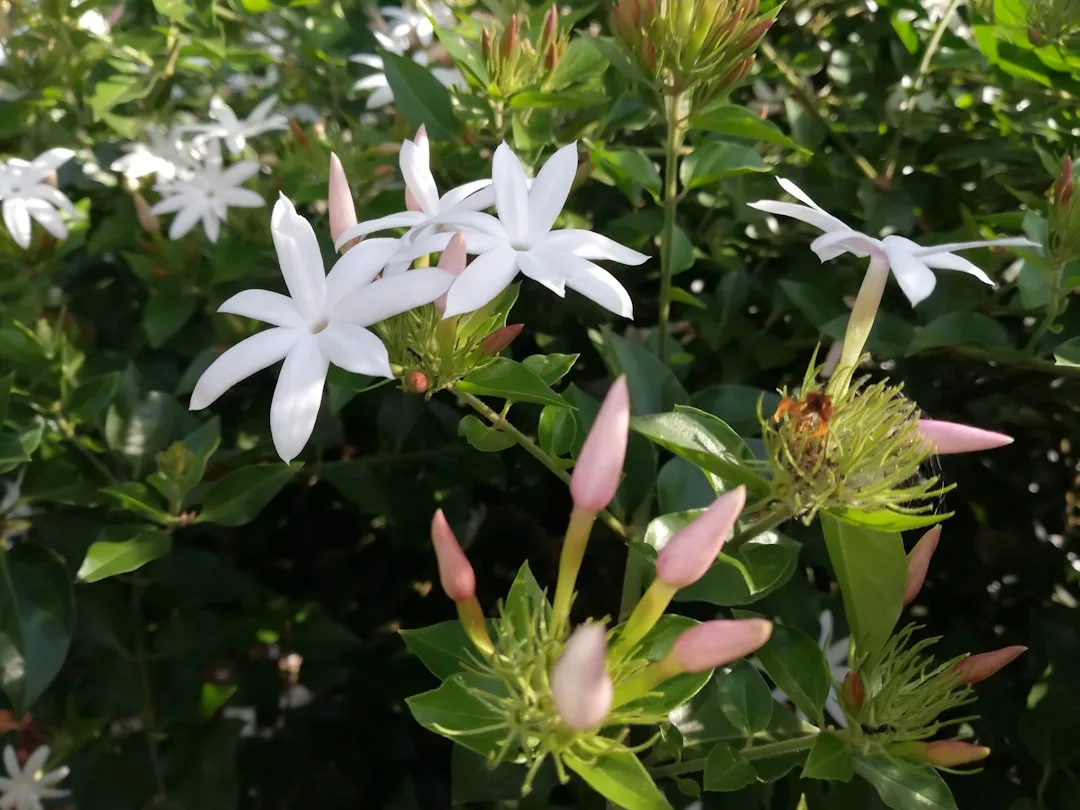
- ✻Bridal gajra — custom-strung to the bride's hair styling and cultural tradition
- ✻Overhead chandeliers for mehndi and haldi (3,000–7,000 bloom range)
- ✻Jasmine varmala garlands for South Indian and fusion ceremonies
- ✻Modern editorial applications in monochromatic and layered palettes
- ✻Cool-chain transport and same-day install for freshness and fragrance
Cultural meaning and traditional use
Jasmine represents purity, sensuality, and auspicious blessing across most Indian cultural traditions. It is associated with the bride's beauty — the gajra (a string of jasmine buds worn in the bride's hair) is one of the most iconic Indian bridal styling elements, used from ancient tradition through contemporary editorial weddings. Its fragrance is culturally associated with weddings themselves; most South Indian families expect jasmine fragrance in the air throughout the ceremony.
In South Indian weddings, jasmine is the dominant flower — jasmine garlands (malai), jasmine strings in the bride's hair, jasmine across mandapam architecture, and jasmine in the attendant florals. In Gujarati and Muslim traditions, jasmine appears prominently in mehndi and haldi chandeliers, bridal entrance canopies, and floral scent-layering throughout the ceremony sequence.
Traditional and contemporary applications
Bridal gajra — the string of jasmine buds worn in the bride's hair — is among our most iconic jasmine applications. We source gajra that match the bride's hair styling and cultural tradition, string them to her specific length, and often layer them with complementary floral accents (small roses, orchid buds) for editorial-leaning brides.
Overhead chandeliers for mehndi and haldi often use jasmine as the anchor flower. Jasmine strings, bundled or hung individually, create a textural ceiling installation with layered fragrance that makes the ceremony space unforgettable. A typical mehndi overhead installation uses three to seven thousand jasmine blooms depending on scale.
Jasmine garlands for varmala, entrance arches, and pandit welcome work particularly well in South Indian weddings but also appear across regional traditions. Full jasmine varmala pairs beautifully with contemporary mandap designs where the floral density is restrained and the garland carries more visual weight.
Modern fusion applications layer jasmine into editorial color stories — jasmine over deep burgundy rose for a moody winter palette, jasmine over coral and peach for summer light, jasmine in monochromatic white installations for minimal modern weddings. Its versatility makes it one of the most flexible flowers in the Indian wedding palette.
Sourcing, freshness, and logistics
Jasmine is more delicate than marigold or rose. It wilts quickly in heat, does not hold well in direct sun for extended periods, and requires specific handling from harvest to installation. Our sourcing for jasmine prioritizes freshness and cool-chain transport — we typically install jasmine elements within twelve hours of the ceremony to preserve fragrance and visual integrity.
California jasmine sourcing combines domestic Southern California growers (for gajra-quality buds and small-scale work) with specialty producers for large-scale mehndi chandelier orders. For destination weddings at Napa Valley, Santa Barbara, or Lake Tahoe, we transport jasmine in refrigerated trucks the morning of the event.
Heat-sensitivity affects event timing. Summer weddings in Palm Springs, the Coachella Valley, or the Central Valley benefit from jasmine installations in shaded or indoor spaces rather than full sun. We calibrate installation placement accordingly during design consultation.
Begin the conversation
Share your dates, venue, and details — Alona reads every inquiry personally and responds within one business day.
Request a consultationExplore related design guides
Ceremony & design guides
By tradition
Luxury venues we design
Serving these cities
Planning & pricing