Havan and Agni Kund Styling
Sacred fire vessel styling and ceremonial integration for traditional Hindu wedding mandaps.
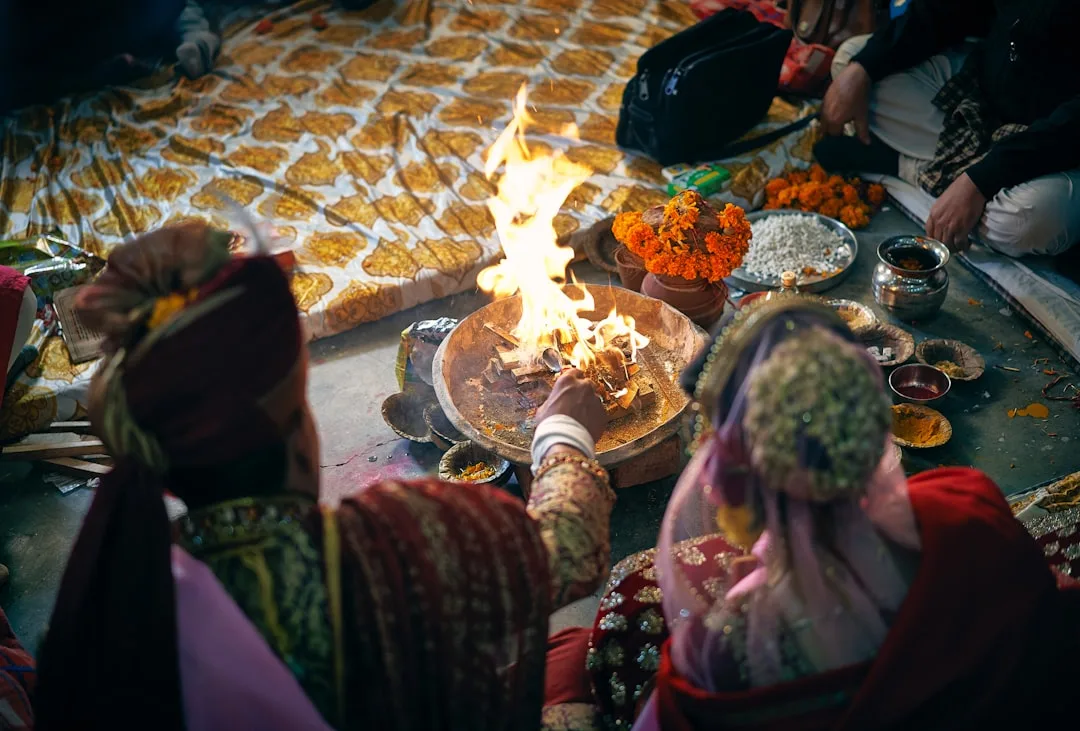
Havan — also called agni kund — is the sacred fire at the center of a traditional Hindu wedding ceremony. Beyond its ritual significance, the havan is a distinct design element that requires specific engineering and styling: fire vessel placement, protective flooring, clear three-foot flame setback from floral, and ceremonial detail integration that reads beautifully in photography without compromising fire safety. CHIC Flowers engineers every traditional Hindu mandap we build around the havan, and this page covers the design specifics of the fire vessel and its surrounding space.
- ✻Copper, brass, or silver fire vessel accommodation (family heirloom or ceremony-rented)
- ✻Fire-retardant protective flooring extending 3+ feet in all directions
- ✻3–4 foot floral clearance from outermost flame
- ✻Heat-resistant overhead floral installation with vertical clearance
- ✻Pandit-coordinated offering staging and ritual access
The fire vessel and protective setup
The havan vessel — typically copper, brass, or silver — holds the active flame during the ceremony. Vessel size varies from small family heirloom vessels (6–10 inches) to larger ceremonial vessels (12–18 inches) depending on regional tradition and pandit preference. Our mandap floor design accommodates whatever vessel the family brings, with appropriate protective setup.
Protective flooring is non-negotiable for fire-permit compliance and for practical fire safety. We use fire-retardant base panels under and around the vessel, sized to extend at least 3 feet in all directions from the outermost flame. For indoor venues, protective flooring is often supplemented with fire-retardant underlayment that protects the venue's floor from heat transfer.
A fire extinguisher stays within arm's reach of the vessel throughout the ceremony. For most indoor venues, a fire marshal-approved extinguisher is placed discreetly adjacent to the mandap. For outdoor ceremonies, additional precautions may apply based on fire permit requirements.
Floral clearance and design integration
Minimum three-foot clearance from the outermost flame to any floral element is our design standard. This applies to all directions — floor-level floral scatter, pillar-mounted floral, and overhead suspended floral all maintain the clearance. Some fire marshals require four-foot clearance for indoor ceremonies; we design to the stricter requirement when it applies.
Within the clearance zone, we style the area around the vessel with minimal decoration — often a small brass thali for ghee and samagri (offerings), a small mirror for ritual use, and culturally appropriate items the pandit specifies. Nothing combustible sits within the clearance zone.
Overhead floral installation above the agni kund benefits from dramatic visual weight at a safe height. Suspended canopies, ceiling medallions, and overhead floral orbs work beautifully when mounted with appropriate vertical clearance. The fire's rising heat affects overhead floral durability — we use heat-resistant flowers and structure.
Pandit coordination and offering logistics
The pandit manages the fire itself during the ceremony. Our coordination with the pandit covers vessel placement, access for the pandit's seating, and staging of offerings (ghee containers, samagri, rice, water). Some pandits prefer elaborate offering arrangements; others keep the setup minimal. Family tradition and the pandit's preference determine specifics.
Sustained fire through the pheras and vow moments requires appropriate fuel and oxygen. The pandit typically manages flame intensity by adding ghee and samagri during the ritual. Our staging leaves the pandit direct access to these supplies without disrupting the ceremony's flow.
Begin the conversation
Share your dates, venue, and details — Alona reads every inquiry personally and responds within one business day.
Request a consultationExplore related design guides
Ceremony & design guides
By tradition
Luxury venues we design
Serving these cities
Signature flowers