Rangoli Floral Floor Art
Ceremonial floor art made from colored powder or fresh flower petals — traditional and contemporary rangoli design.
Rangoli is the ancient Indian art of decorative floor design, typically created from colored powder, rice flour, or — in our luxury wedding applications — fresh flower petals arranged in geometric or floral patterns. Rangoli appears at Hindu wedding ceremonies as welcoming decoration at entrances, at mandap thresholds, and at specific ritual placement points. CHIC Flowers designs rangoli as a detail element in our traditional Hindu wedding production, either as fresh-petal rangoli (our specialty) or by coordinating with rangoli-specific artists for colored-powder traditional designs.
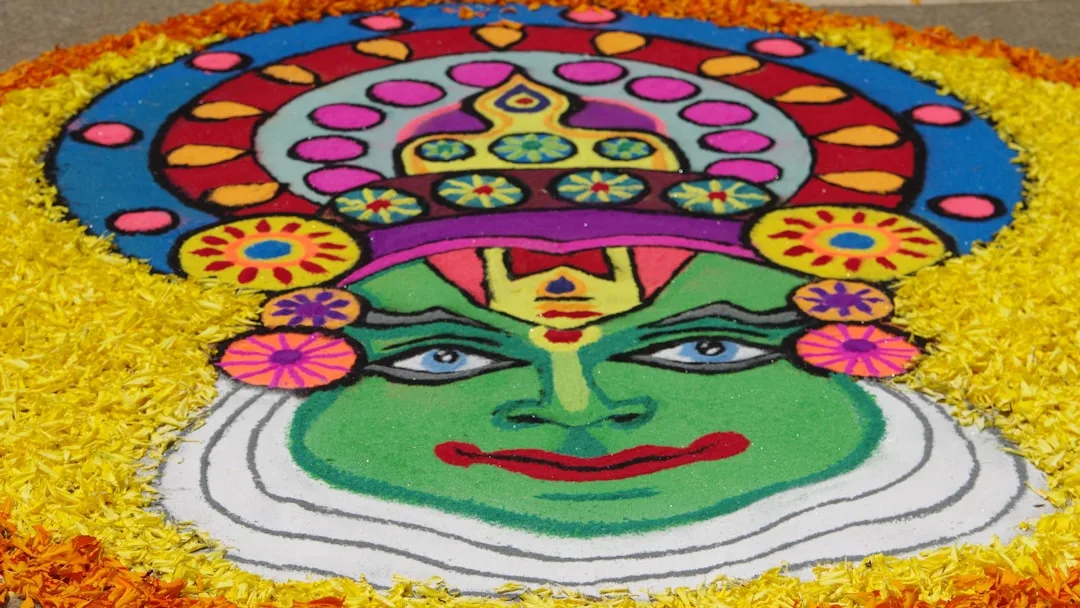
- ✻Fresh-petal rangoli in geometric or floral patterns
- ✻Coordination with traditional colored-powder rangoli specialists
- ✻Entrance threshold, mandap threshold, reception entry placements
- ✻Scale from 3 ft accent to 12 ft feature diameter
- ✻Final-pass install to preserve petal freshness
Fresh-petal rangoli vs traditional colored powder
Traditional rangoli uses colored rice flour, colored sand, or chalk powder arranged in geometric mandala patterns or floral motifs. The art form is deeply cultural and practiced at home during festivals as well as weddings. Traditional rangoli is typically created by a dedicated artist — we coordinate with rangoli specialists when couples want authentic colored-powder designs.
Fresh-petal rangoli replaces colored powder with fresh flower petals arranged in the same geometric or floral patterns. Rose petals, marigold petals, jasmine blossoms, and greenery create a three-dimensional version of rangoli that reads beautifully in photography and references the traditional art form while integrating with our broader floral installation. This is the rangoli variant we design most often.
Placement and scale
Typical rangoli placement includes: entrance threshold at the ceremony venue or mandap foyer (welcoming first-guests visual); mandap entrance threshold (greeting the couple's arrival); reception entrance (signaling celebration transition); and specific ritual placement points near the kalash, pandit seating, or phere aisle.
Size ranges from small (3 feet diameter) accent rangolis at specific placements to large (8–12 feet diameter) feature rangolis that serve as visual centerpieces at entrances. Fresh-petal rangolis at larger scale require significant petal volumes (often 1,500–4,000 petals for a full-coverage design).
Install logistics
Rangoli installs as the final pass before guest arrival — fresh petals should be laid approximately two hours before guests enter the space. Petal freshness affects visual quality; over-handled petals wilt visibly within four to six hours in most conditions.
Traffic consideration matters. Rangoli at entrance thresholds is typically walked around rather than over (guests naturally avoid stepping on the design), but in high-traffic scenarios we place rangoli at decorative-only positions rather than directly in walking paths.
Begin the conversation
Share your dates, venue, and details — Alona reads every inquiry personally and responds within one business day.
Request a consultationExplore related design guides
Ceremony & design guides
By tradition
Luxury venues we design
Serving these cities