Parsi Zoroastrian Wedding Florist
Sacred-fire ceremony design and Parsi tradition florals for California's Zoroastrian wedding celebrations.
Parsi Zoroastrian weddings — ashirwad — carry one of the oldest continuous wedding traditions in the world, rooted in Zoroastrian liturgy and centered on the sacred fire that defines Zoroastrian worship. CHIC Flowers' Parsi wedding practice honors the tradition's specific ritual requirements and aesthetic sensibility — refined, reverent, and culturally distinct from Hindu, Sikh, or Muslim wedding vocabularies. Key ceremony moments include madhav saro (the tying of a fish to a banana sapling at the bride's home), achu michu (a blessing ritual using rice, coconut, and dates), and the ashirwad itself — the priest's blessing that constitutes the marriage.
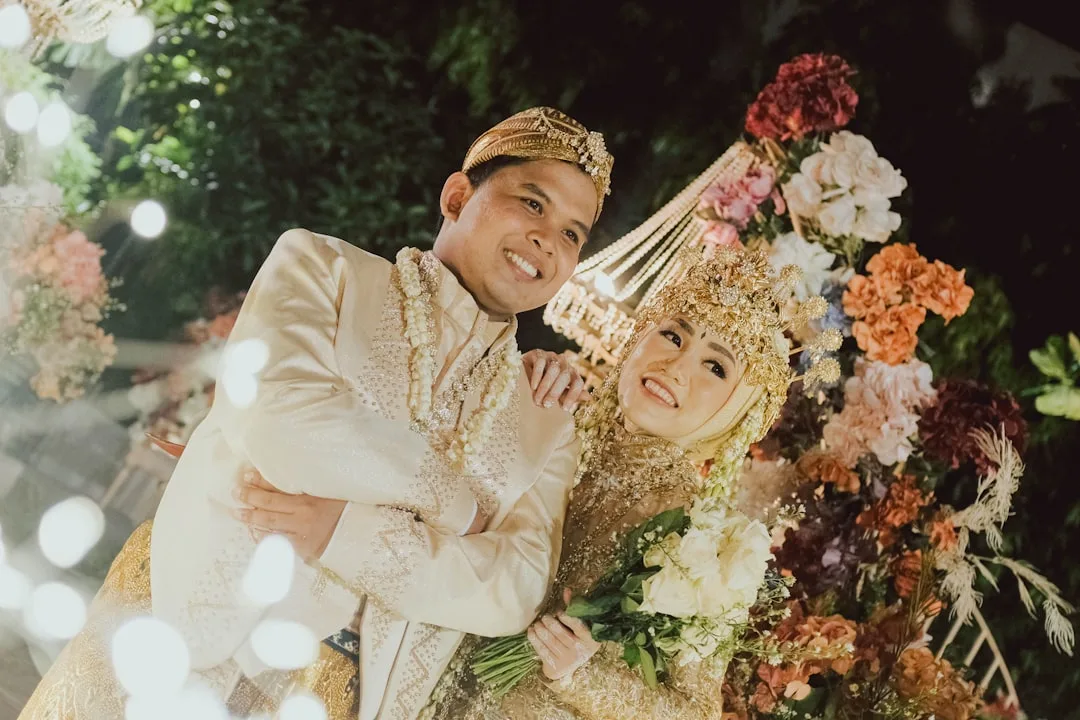
- ✻Ashirwad ceremony staging with dastur-coordinated setup
- ✻Madhav saro, achu michu, adarni pre-wedding ritual florals
- ✻Refined white, champagne, soft pink, and gold palette
- ✻Intimate venue scale (150–300 guests typical)
- ✻Sacred fire ritual accommodation with fire permit coordination
The ashirwad ceremony
The Parsi ashirwad is the central marriage ceremony, conducted by a dastur (Zoroastrian priest) with the couple seated facing each other on raised platforms. A cloth is held between them during the initial blessings, then removed for the chhedo bandhvanu moment when the priest binds the couple's hands with thread while reciting prayers. The sacred fire (atash) is a meaningful presence throughout but is typically a restrained flame rather than the large agni kund of a Hindu wedding.
Our ashirwad ceremony staging uses elegant refined floral — white, soft pink, champagne, and gold accents with jasmine, tuberose, and rose as primary flowers. Color density is lower than a Hindu mandap; the aesthetic reads spiritual and reverent rather than celebratory-saturated.
Pre-wedding Parsi rituals
Parsi wedding week includes several distinct pre-ceremony rituals. Madhav saro is held at the bride's home and involves planting a mango sapling and tying a fish to it, symbolizing prosperity and fertility. Adarni is the formal engagement. Achu michu is a blessing ritual where the couple is welcomed with a platter of rice, coconut, dates, and an egg. Rupia pairavvu is the gift exchange between families.
Our Parsi wedding productions can scale to cover all these pre-ceremony moments with coordinated floral staging at the bride's and groom's homes or at hotel suites where the family is staying. The aesthetic remains refined throughout — small staged floral moments rather than elaborate installations.
Reception and aesthetic direction
Parsi receptions are typically elegant, refined celebrations — formal seating, stage backdrop that frames the couple, and tablescape progression without the saturated density of North Indian Hindu weddings. Palettes lean classical: white, champagne, soft pink, gold, and ivory. Floral density stays restrained; the aesthetic reads as sophisticated editorial rather than traditional density.
Parsi families are a smaller diaspora in California than Hindu or Sikh families, and the community often knows each other well, which means Parsi weddings tend to be more intimate (often 150–300 guests) than large Hindu celebrations. Venue selection matches — intimate luxury venues like Auberge du Soleil, San Ysidro Ranch, Hotel Bel-Air, or smaller ballrooms at major hotels suit Parsi wedding scale well.
Begin the conversation
Share your dates, venue, and details — Alona reads every inquiry personally and responds within one business day.
Request a consultationExplore related design guides
Ceremony & design guides
By tradition
Luxury venues we design
Serving these cities
Signature flowers