Marigold (Genda Phool) in Indian Weddings
The single most culturally significant flower in Indian wedding design.
Marigold — genda phool in Hindi — is the anchor flower of Indian wedding design. No other single flower carries more cultural meaning, or more visual weight, in a Hindu or Sikh wedding. CHIC Flowers sources, designs with, and builds installation around marigold at a level no other California florist matches, with sourcing relationships that let us order fifteen to twenty thousand stems for a single wedding with color and size consistency. This page covers how we use marigold across the Indian wedding week and what distinguishes traditional from contemporary applications.
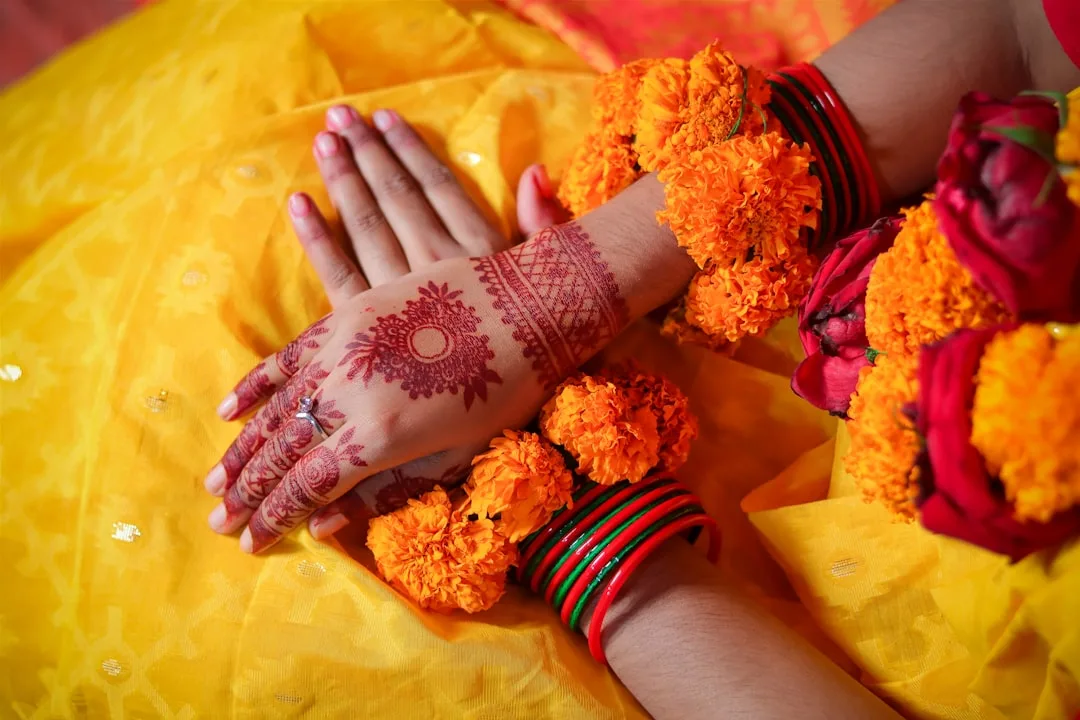
- ✻California's deepest marigold sourcing network for large-scale installations
- ✻Traditional mandap pillar coverage, phoolon ki chaadar, ghodi dressing
- ✻Contemporary fusion applications with selective marigold as cultural anchor
- ✻Garland making for varmala, family, and attendant presentation
- ✻Color consistency management across 15,000+ stem orders
The cultural meaning
Marigold in Hindu tradition represents the sun, prosperity, and protection against evil. The flower's intensity of color and fragrance make it ritually significant, and it is used across ceremonies from haldi through mandap to baraat. For Hindu couples, marigold is rarely absent from wedding design — the question is density and context, not inclusion.
Regional variation in marigold use is real. North Indian, Gujarati, and Punjabi weddings tend toward full-coverage marigold. South Indian weddings use marigold more selectively, with jasmine and tuberose dominating the floral vocabulary. Sikh weddings use marigold restrained on the anand karaj side and more generously in pre- and post-ceremony celebrations.
Traditional applications
Mandap pillar and canopy coverage is the most iconic traditional application. Our traditional four-pillar mandaps use marigold as the density base — typically three to five thousand stems per pillar, depending on coverage density, with rose and tuberose layered as secondary accents. The effect is warmth and visual weight that matches the ceremonial significance of the mandap itself.
Garland making for varmala, family exchange, attendant presentation, and entrance draping is a fundamental marigold application. Our varmala garlands typically use marigold as the base with rose accents, sized to the couple's proportions and dressed to the wedding palette.
Phoolon ki chaadar — the bride's floral canopy carried overhead by family during key ceremonial moments — is a high-visibility marigold application. Our chaadars use marigold strings interwoven with jasmine and rose, dressed to match the overall wedding palette.
Baraat ghodi dressing uses marigold extensively on the horse's bridle, saddle, and chest dressing. Marigold holds up well under motion and heat, making it functionally ideal for baraat procession floral.
Contemporary applications
Modern fusion mandap designs often reduce marigold density while retaining it as a cultural anchor. Our contemporary round mandaps might use marigold only at the canopy peak and at specific pillar accent points, with orchid, anthurium, and garden roses carrying the visual weight elsewhere. The marigold remains present; it just does not dominate.
Monochromatic marigold installations — full rooms dressed only in marigold — have become a striking editorial choice for haldi ceremonies and smaller gatherings. The color saturation produces unforgettable photography but requires intentional palette commitment.
Marigold in non-Hindu fusion weddings has become increasingly common as a signal of one partner's cultural tradition. For Hindu-Christian or Hindu-Jewish weddings, selective marigold placement references the Hindu side while allowing other floral vocabularies to share the space.
Sourcing and logistics
California marigold sourcing is more difficult than sourcing rose or orchid. Domestic production is limited and often varietal-specific; most luxury-scale Indian weddings require imported or specialty-grown marigold. Our sourcing network includes California growers, Southern California wholesale imports, and direct relationships with specialty producers for large orders. For a single wedding requiring fifteen thousand-plus stems, we typically begin sourcing ten to fourteen days before the event.
Marigold color consistency matters for large installations. We source to match a specified deep-orange or saffron tone and reserve back-up stems in case of delivery variance. Color bleed-through between different marigold batches can affect installation photography, so consistency is a production quality metric.
Begin the conversation
Share your dates, venue, and details — Alona reads every inquiry personally and responds within one business day.
Request a consultationExplore related design guides
Ceremony & design guides
Luxury venues we design
Serving these cities
Planning & pricing