Indian Wedding Reception Stage Design
The couple's reception stage — the visual anchor of the evening.
Every Indian wedding reception has a stage. The couple sits there for the receiving line (aashirvadam), speeches, cake cutting, and often the first dance or family dance performances. The reception stage is the room's primary visual anchor, captured in every photograph and video of the evening, and its design defines the reception's aesthetic more than any other single element. CHIC Flowers designs reception stages across a range of scales — from intimate raised platforms for 150-guest celebrations to elaborate LED-integrated stages with full floral backdrop coverage for 700+ guest productions.
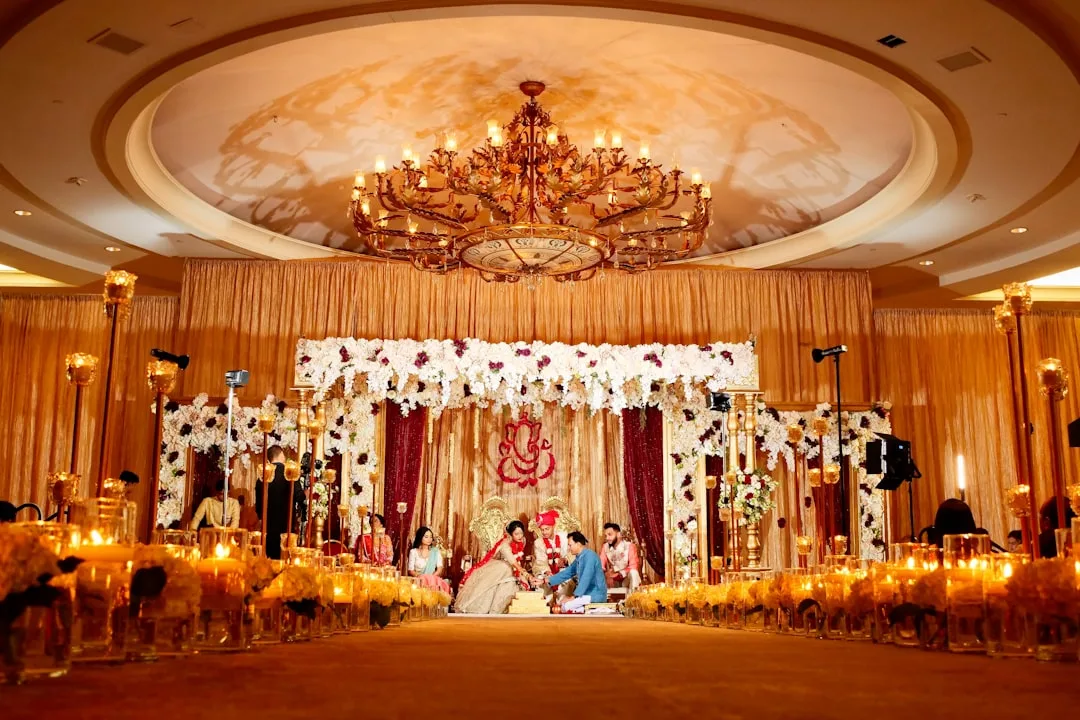
- ✻Raised platform 12–18 inches with matched thrones or lounge seating
- ✻Dense floral wall, LED-integrated, architectural, or suspended-garland backdrops
- ✻12–24+ ft backdrop width with 1,500–4,500 stem coverage
- ✻Integration with aashirvadam flow and cake-cutting photography angles
- ✻Lighting coordination with uplighting, spotlights, and LED wall brightness
Stage structure and couple seating
Reception stages are typically raised twelve to eighteen inches above the ballroom floor so the couple is visible from seated guest positions. Stage depth runs ten to sixteen feet depending on whether the couple is seated alone or accompanied by immediate family at key moments. Stage width typically matches the backdrop width, which can range from twelve feet for intimate stages to twenty-four feet or more for ballroom-scale productions.
Couple seating on stage ranges from ornate carved thrones in traditional palettes to sleek modern lounge seating in contemporary fusion designs. Matched thrones (one each for bride and groom) are the most common choice; some families opt for a single love-seat sofa for a more relaxed aesthetic. We design seating into the overall stage aesthetic so the chairs read as part of the installation rather than added-on furniture.
Backdrop — the photograph-defining element
The reception backdrop is the single most photographed surface of the evening. Our backdrop designs span several aesthetic directions: dense floral walls in traditional palettes, LED-integrated backdrops where video walls frame in floral, architectural geometric backdrops with restrained floral accents, and suspended-garland backdrops that create dimensional depth without a solid wall.
Dense floral wall backdrops work beautifully for Gujarati, Marwari, and Punjabi wedding aesthetics. Typical dimensions are twelve to twenty feet wide by eight to ten feet tall, with floral coverage in marigold, rose, orchid, and specialty blooms coordinated to the palette. Stem counts range from 1,500 to 4,500 depending on size and density.
LED-integrated backdrops combine a centered LED wall (for displayed imagery, video montages, or couple monograms) with floral framing. This approach works for modern and fusion weddings where the couple wants visual dynamism beyond static floral.
Suspended-garland backdrops use cascading floral vines and hanging elements that create a dimensional, shifting visual without a solid wall. This approach suits outdoor tented receptions and contemporary venues where the backdrop reads as more landscape than installation.
Integration with reception flow
The reception stage must integrate with the broader reception flow. Guests approach for the aashirvadam receiving line, which means the stage needs clear entry and exit paths with room for blessing moments. The cake cutting typically happens either on stage or immediately in front of it, requiring a clear and photogenic frame. First dance or family performances may use the stage; more commonly performances happen on the dance floor with the stage as backdrop.
Lighting integration is critical. The reception stage is the highest-lit area of the room throughout the evening — we coordinate with the lighting designer on uplighting color, spotlight positioning for key moments, and ambient lighting that does not wash out the floral coverage. For LED-integrated backdrops, the LED brightness and color is coordinated so the display does not overpower the surrounding floral.
Begin the conversation
Share your dates, venue, and details — Alona reads every inquiry personally and responds within one business day.
Request a consultationExplore related design guides
Ceremony & design guides
By tradition
Luxury venues we design
Serving these cities