California Noise Ordinance Guide for Indian Weddings
What baraat dhol players, outdoor sangeet performances, and amplified-music ceremonies need to know about California noise rules.
Indian weddings involve sound that most non-Indian weddings do not — dhol drums during baraat, outdoor sangeet performances, traditional music at ceremony, and amplified DJ sets that often run past midnight. California's noise ordinance patchwork varies significantly by jurisdiction, and understanding these rules early in planning prevents last-minute adjustments. CHIC Flowers coordinates with your planner and venue events team on noise-ordinance compliance as part of baraat and sangeet production planning. This page covers the jurisdictional patterns worth understanding.
- ✻Jurisdiction-specific noise ordinance patchwork across California
- ✻Wine country and rural venues typically stricter than urban hotels
- ✻Baraat daytime timing sits within most noise thresholds
- ✻Sangeet/reception amplified cutoffs typically 11:00 PM to 1:00 AM
- ✻Outdoor late-running events need 30–60 day permit lead time
Jurisdictional patterns
Noise ordinances in California are jurisdiction-specific. City of Beverly Hills has relatively strict residential noise rules; outdoor amplified music past 10:00 PM often requires special permits. City of Los Angeles is more flexible for hotel ballroom events but residential-adjacent venues face constraints. Santa Monica, Laguna Beach, and other coastal cities have their own patterns.
Napa County, Sonoma County, and rural Northern California venues often have stricter rural noise ordinances than urban hotels — carryover sound affects winery-adjacent residential neighbors more than it affects downtown Beverly Hills. Wine-country weddings typically end amplified music earlier (10:00 PM or 10:30 PM) than urban hotel weddings (midnight or 1:00 AM).
Venue-specific policies layer on top of jurisdictional rules. Many luxury hotels contractually end amplified music at 11:00 PM or midnight regardless of city ordinance. Private estates have more flexibility but also carry more neighbor-relationship considerations.
Baraat dhol-specific considerations
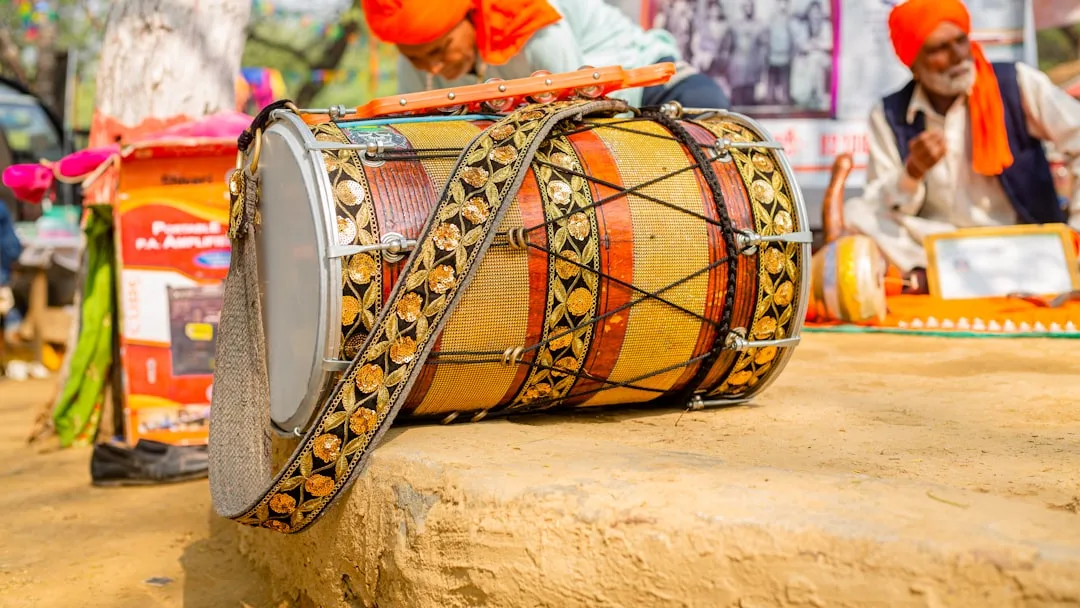
Baraat typically happens mid-to-late afternoon, which sits well within daytime noise-ordinance windows in most jurisdictions. The challenge is usually not the legal noise threshold — it's the venue's contractual policy or the neighbors' tolerance for procession-style amplified rhythm.
For baraats at urban Beverly Hills and Santa Monica venues, we coordinate with security and venue management on procession route and dhol placement. For rural and winery venues, baraat processions often happen at the property interior rather than near the property boundary to minimize carryover sound.
Dhol amplification is rarely an issue at the legal threshold; the drums themselves produce sound within typical ordinance limits. The issue becomes amplified when dhol is paired with amplified music, loudspeakers, or fireworks — which push total sound above typical limits.
Sangeet and reception performance limits
Sangeet and reception performances involve amplified music, often past 10:00 PM. Venue contractual policies typically determine when amplified music must end. Most luxury California hotels contractually end amplified music at 11:00 PM (earlier for outdoor spaces) to 1:00 AM (later for indoor ballrooms). After the amplified cutoff, some venues allow acoustic or low-volume continuation.
For outdoor sangeet and reception, jurisdictional noise ordinances become the harder constraint. Outdoor amplified music past 10:00 PM requires special event permits in many jurisdictions, which we coordinate with your planner.
Permits and coordination
Noise permits for late-running outdoor events are issued by the city or county hosting the venue. Applications typically require 30–60 day lead time and include specific event details, sound-level commitments, and sometimes a professional sound engineer's plan.
Our scope does not typically include noise permit filing — this sits with the planner or the venue events team. We coordinate the floral production schedule around whatever noise-limitation the permit establishes, and we brief the DJ and performance coordinators on cutoff times.
Begin the conversation
Share your dates, venue, and details — Alona reads every inquiry personally and responds within one business day.
Request a consultationExplore related design guides
Ceremony & design guides
Luxury venues we design
Serving these cities