Hindu-Christian Fusion Wedding Florist
Dual-ceremony, dual-tradition wedding design that honors both Hindu and Christian heritage without compromise.
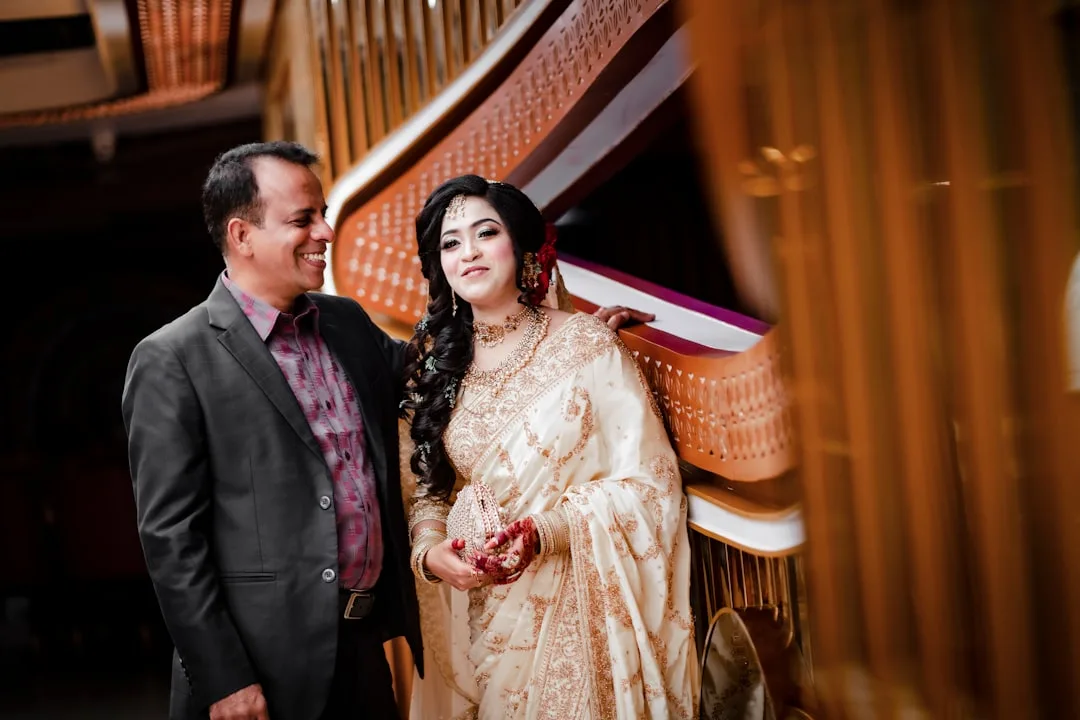
Hindu-Christian fusion weddings are the most common fusion segment we design for in California, and they are also among the most technically and culturally demanding. A fusion wedding typically involves two full ceremonies — a Hindu ceremony with mandap, pandit, and pheras, and a Christian ceremony with officiant, altar, and liturgical structure — often on the same day or across two days of the wedding week. CHIC Flowers' fusion practice delivers designs that integrate both traditions meaningfully, with a unified palette and visual vocabulary that lets both ceremonies feel part of a single wedding rather than two weddings stapled together.
- ✻Unified palette across Hindu and Christian ceremonies
- ✻Contemporary mandap designs that pair cleanly with Christian altar aesthetic
- ✻Dual-officiant production coordination
- ✻Single-structure designs that serve as mandap and chuppah/altar
- ✻Reception design that blends both traditions into a unifying celebration
Two ceremonies, one wedding
Most Hindu-Christian fusion weddings separate the ceremonies by several hours or by a day, allowing each to have its full ritual integrity. A morning Christian ceremony at a church or officiant-led outdoor setting, followed by an afternoon Hindu ceremony with mandap, and an evening reception that blends both traditions, is a common sequence. Some families hold the Christian ceremony one day and the Hindu ceremony another day.
Our design approach starts with identifying a unified color palette and floral vocabulary that works across both ceremonies. A palette of ivory, blush, sage, and warm gold — with marigold accents for the Hindu ceremony — can carry through to a Christian altar design, a Hindu mandap, and a reception stage, creating visual cohesion across the day.
Mandap and altar coordination
Hindu mandap design for fusion couples often trends contemporary rather than dense-traditional — round mandaps, minimal four-pillar structures, or open-canopy designs that photograph cleanly alongside a Christian altar without creating visual discord. Our fusion mandaps emphasize structural elegance and clean palette integration.
Christian ceremony floral depends on venue and denomination. For Catholic or Orthodox church weddings, we follow liturgical guidelines on permitted floral placement and work with the parish coordinator. For non-denominational or outdoor officiant ceremonies, we have more design freedom — arbors, aisle arrangements, altar flowers, and chuppah-style canopies all work depending on family preference.
Some fusion couples request a single structure that functions as both mandap and chuppah/altar — a design approach we have developed for fusion weddings where the same frame supports the Hindu ceremony in the morning and the Christian ceremony in the afternoon with different floral dressing for each.
Coordinating two officiants
Fusion weddings involve two officiants — the Hindu pandit and the Christian priest, pastor, or non-denominational officiant. Our production coordination includes a joint call with both officiants at least three weeks before the wedding to align on ceremony setup, timing, and any shared ritual elements (unity candle lighting, combined ring exchange, etc.).
Some families blend elements — the pandit does a brief Hindu blessing at the Christian ceremony, the officiant speaks during the Hindu ceremony, or the couple exchanges rings during the Hindu ceremony and performs varmala at the Christian ceremony. These blended elements require careful pre-planning; our design accommodates whatever the family has decided.
Reception — the unifying celebration
Reception after a Hindu-Christian fusion wedding is where both traditions come together fully. Our reception designs blend visual elements from both ceremonies — a stage backdrop that references mandap geometry, tablescapes in a palette that honors both traditions, and optional floral references (marigold accents, jasmine strings) that ground the celebration culturally. Modern fusion receptions often feel more editorial than either tradition alone would produce, because the constraint of fusing visual languages pushes designers toward more refined and intentional choices.
Guest mix affects design priorities. Fusion weddings often bring together families from different religious, national, or regional backgrounds — Indian, American, European — and the reception needs to feel welcoming across that mix. Our palette and installation decisions favor universal visual appeal rather than tradition-specific density.
Begin the conversation
Share your dates, venue, and details — Alona reads every inquiry personally and responds within one business day.
Request a consultationExplore related design guides
Ceremony & design guides
Luxury venues we design
Serving these cities
Signature flowers
Planning & pricing