English Garden Wedding Flowers
Lush, romantic, abundant — the garden-grown look, designed for luxury weddings in Southern California.
The English garden style is the most romantic of the luxury wedding aesthetics: loose, abundant arrangements that look gathered from a country-estate garden rather than built in a studio — garden roses, peonies, sweet peas, foxglove, and trailing greenery in soft, painterly palettes. CHIC Flowers designs English garden wedding flowers for estate, garden, and resort celebrations from Montecito to San Diego. Below: what defines the style, the flowers that make it, the seasons that suit it, and how it scales from a bridal bouquet to a fully tented reception.
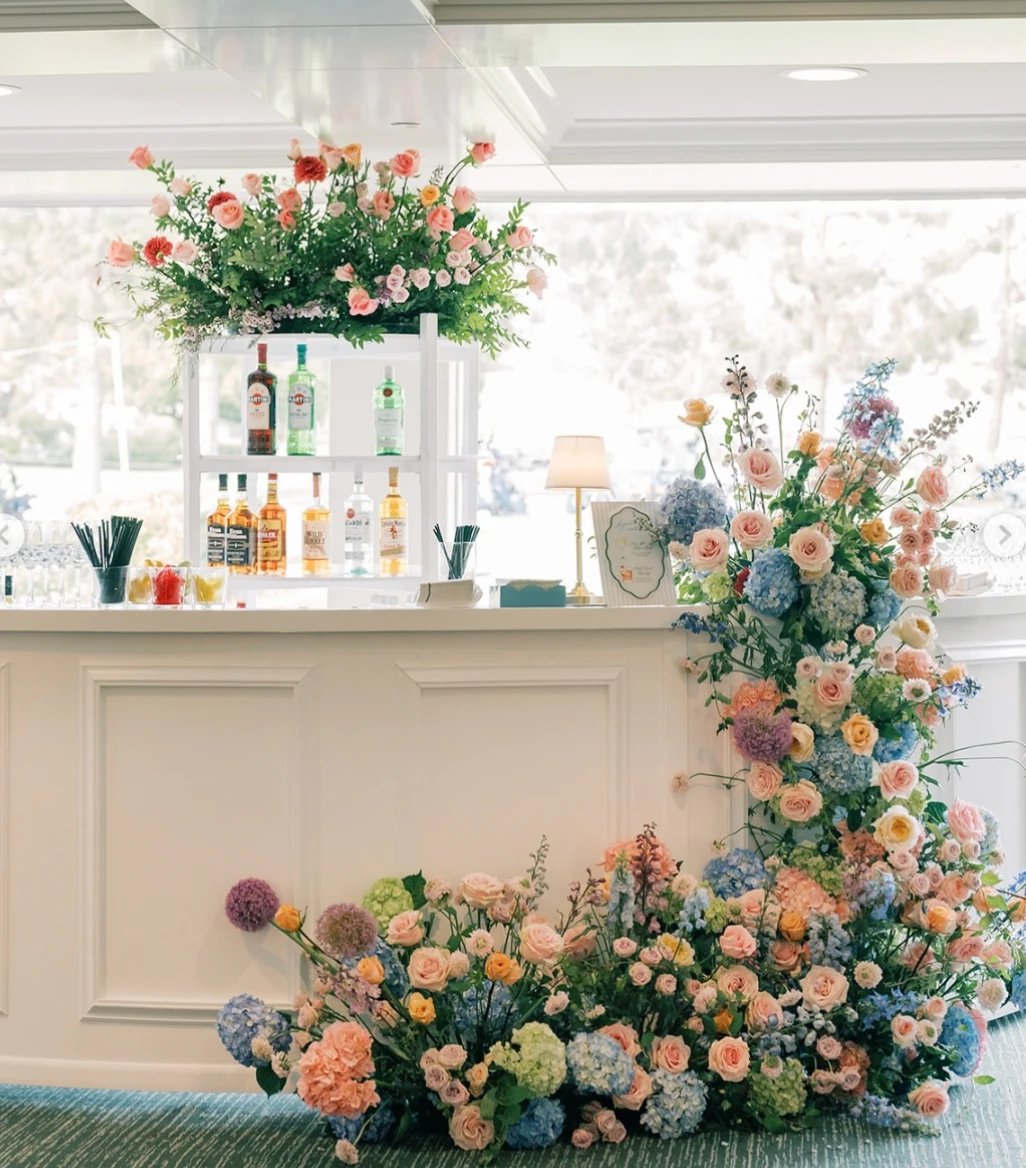
- ✻Loose, abundant, just-gathered design
- ✻Garden roses, peonies, sweet peas & trailing greenery
- ✻Soft, painterly palettes with generous green
- ✻Ideal for estates, gardens & tented receptions
- ✻Designed around each season's peak blooms
- Signature flowers
- Garden roses, peonies, sweet peas
- Palette
- Blush, cream, apricot, lavender
- Peak seasons
- Spring & early summer
- Best settings
- Estates, gardens, tents
What defines the English garden style
Abundance and looseness. An English garden arrangement has movement — stems at varied heights, blooms facing different directions, vines and grasses trailing over the edge of the vessel — so it reads as just-picked rather than constructed. Palettes are soft and layered: blush, cream, apricot, lavender, and dusty mauve, always with a generous proportion of green.
Vessels matter as much as flowers. Footed garden urns, low compotes, aged terracotta, and weathered stone carry the estate feeling; a sleek modern vase would break it. The goal, on every surface, is to feel grown rather than arranged.
The flowers that make it
Garden roses are the backbone — the ruffled, fragrant David Austin varieties and their cousins — joined by peonies, sweet peas, ranunculus, and lisianthus for softness. Height and wildness come from delphinium, foxglove, larkspur, scabiosa, and clematis vine; herbs, jasmine, and flowering branches add scent and texture.
Because the look depends on flowers at their natural peak, we design around the season rather than forcing out-of-season stems. The style is at its best when every bloom in it is genuinely in its moment.
Ceremony design
Outdoors, the English garden ceremony is meadow-like: planted aisle borders that look as if they grew there, an arch or arbor softened with climbing florals until the structure nearly disappears, and overflowing urns at the altar. Private estates, botanical gardens, and garden-courtyard venues suit it naturally.
Indoors or in a ballroom, we bring the garden in — grouped urns and planted elements, a floral-clad arbor, and greenery at the base of the aisle — so the ceremony feels like a conservatory rather than a hotel.
Reception design
Long tables are the English garden's natural home: compotes at staggered heights running the length of the table, bud vases and candlelight filling the gaps, and greenery runners threading between them. Round tables take a single lush compote or a footed urn, often paired with low clusters so the whole surface feels planted.
A tented reception, in particular, reads as a garden party — we often carry florals up the tent poles and across the entrance so the tent itself feels overgrown.
Season and palette
Spring is the peak: peonies, sweet peas, ranunculus, and lilac give the style its most romantic palette. Early summer brings garden roses, delphinium, and foxglove at their fullest. An autumn English garden shifts warmer — dahlias, heirloom chrysanthemums, garden roses in copper and plum, with berries and seed heads.
Each season gives the style a slightly different character; the design adapts to it rather than fighting it, which is also what keeps the flowers at their best quality and value.
From our portfolio: garden weddings we have designed
At Jeune Perche, a private estate in Fallbrook with stone walls, olive groves, and lavender-lined pathways, the arrangements were made to feel gathered from a French garden — loose, abundant bundles of garden roses, ranunculus, and sweet peas in soft pastels with trailing greenery and herbs such as rosemary and lavender. The ceremony in the olive grove used a rustic wooden arch softened with cascading florals, and the courtyard reception ran long family-style garland runners mixed with individual centerpieces.
At Rancho Valencia in Rancho Santa Fe, the ceremony stood in the resort's citrus grove under a romantic arch of cascading florals, with a soft pastel palette of blush garden roses, peach ranunculus, and ivory peonies paired with greenery and Mediterranean herbs; the lantern-lit terrace reception kept arrangements low and abundant so they invited conversation. At Santa Luz Country Club, cascading greenery was draped over the club's existing stone arbor with clusters of white and blush roses, and the tables carried low, organic centerpieces of dahlias, spray roses, and olive branch in neutral vessels. At Ethereal Gardens in Escondido, the ceremony used scattered ground arrangements that blended into the garden and the tables took loose, meadow-style centerpieces.
Luxury scale and cost
The English garden look can be understated or grand, and abundance is where the budget goes: loose, overflowing design uses far more stems per arrangement than a tight, formal one, and planted aisle and arbor installations are labor-intensive. A full garden-style estate wedding sits comfortably in the luxury ranges covered in our budget guide.
Where the budget is more measured, we concentrate the abundance at the ceremony and the head table and let bud vases and greenery carry the rest of the room.
Begin the conversation
Share your dates, venue, and details — Alona reads every inquiry personally and responds within one business day.
Request a consultationExplore related design guides
Ceremony & design guides
Luxury venues we design
Signature flowers
Planning & pricing
Frequently asked questions
What is an English garden wedding style?+
Which flowers are used in an English garden wedding?+
What time of year is best for English garden wedding flowers?+
Can an English garden style work in a ballroom?+
How much do English garden wedding flowers cost?+
Ready to begin?
Share your date, venue, and vision — we design every luxury wedding personally and respond within one business day.
Contact us